
Pop the cork on a Spanish sparkler and chances are it's Cava. But Spain's effervescent landscape runs deep and there are a few things about the sparkling wines in Spain that might surprise you.
Cava, the O.G. sparkling wine from España, is rooted in the vision of Spanish vintner Josep Raventós. His family had been making wine since the 1400s in the northern region of Penedès more or less in the same way, but when he traveled to Champagne in the 1860s, he encountered a completely new method. He was intrigued by the way vintners were creating bubbles in the bottle, and became determined to craft his own using Spanish grapes.
After years of experiments using local grapes and the traditional Champagne method of creating and bottling sparkling wine, Raventós produced his first bottling in 1872.
As fate would have it, a deadly plague was descending on the vineyards of the region at the time. Phylloxera, a microscopic, aphid-like insect native to North America, devastated vineyards across Europe. Vintners in the region began planting American-phylloxera resistant rootstocks and grapes, which led to a Renaissance of creativity in vineyards and cellars, and a corresponding boom in quality Cava production.
In 1959, the sparkling wine was officially dubbed “Cava,” the Spanish word for cellar or cave, and in 1972, the Cava denomination was officially approved, protecting the production of sparkling wine in Spain, and laying the groundwork for farming and production rules.
But in the 1980s, when Spain became part of the European Economic Community, major brands significantly ramped up production to meet demand, leading to a surge in Cava’s popularity around the world. (In 1980, just about 10 million bottles of Cava were exported; by 2014, that number surged to 155 million). Some critics believe that success led to bigger productions, and lower quality overall.
What Is the Traditional Method of Winemaking for Cava?
The Champagne Method, also known as the traditional method, or in Spain as the método tradicional, is a straightforward, but far from simple winemaking method that yields incredibly complex results.
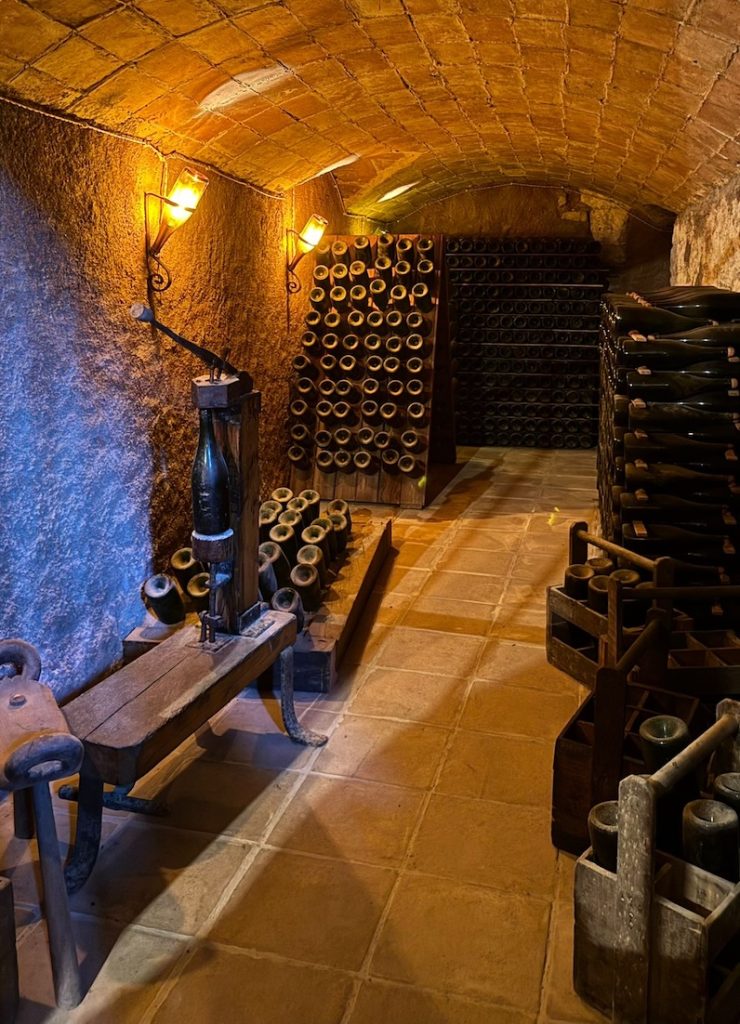
As with still wines, the first fermentation occurs outside of the wine bottle, typically in a stainless steel tank. After the base wine is blended and settled, a liqueur de tirage (a mixture of sugar and yeast) is added, and the bottle is either put under crown cap or cork, where a second fermentation takes place. During that second fermentation, bubbles are produced as a byproduct after yeast “eat” the sugar and metabolize it as CO2 and ethanol. In a sealed bottle, the C02 is trapped, and creates the carbonated fizz so many seek out.
After a period of aging on the lees (or autolytic yeast particles), the wine is clarified through a process known as riddling, and then disgorged to remove the lees. At that point, a portion of dosage (a mixture of wine and sugar) is added to the sparkling wine as a topper, and the bottles are corked and packaged for consumption.
All Cava is produced using this method. But in recent years, two new categories of sparkling Spanish wine, also produced using the traditional method, have emerged: Clàssic Penedès and Corpinnat. Clàssic Penedès was publicly launched in 2014, while Corpinnat emerged in 2018.
Both movements were developed because organizers believe that Cava’s incredible success has come at the price of a downgrade in quality.
Comparing Cava, Clàssic Penedès and Corpinnat
Sure, Cava is Spain's sparkling superstar. But it's far from the only bottle worth celebrating. In recent years, two new categories of sparkling Spanish wine, also produced using the traditional method, have emerged: Clàssic Penedès and Corpinnat. Clàssic Penedès was publicly launched in 2014, while Corpinnat emerged in 2018.
Where Can Each Be Produced?
Cava: About 95% of Cava is produced in Catalonia, especially in the region of Penedès. But it can also be grown and produced in other regions, including Aragon, La Rioja, Navarra, Valencia, Extremadura and Euskadi.
Clàssic Penedès: Only within the DO Penedès region of Catalonia. The grapes must be grown there, and the production must occur there.
Corpinnat: Production is limited to 39 municipalities within Penedès. All wine must be made on the producer’s estate.
Farming, Grapes & Aging Requirements
Cava: Higher classifications, including all Guarda Superior, are now farmed organically. While local Spanish grapes like Xarel·lo, Macabeu and Parellada are used, there are several other authorized grapes, including red grapes like Garnacha and Monastrell, and international grapes like Chardonnay and Pinot Noir. Wine must be aged for a minimum of 9 months for Guarda Cava, 18 months+ for higher classifications.
Clàssic Penedès: All wines must be formed organically, and vintners prioritize local grapes like Xarel·lo, Macabeu, and Parellada, with additions of international grapes like Chardonnay and Pinot Noir, and others like Garnacha frequently included. Wines must be aged for 15+ months.
Corpinnat: It must be organic, and 90% of the blend must be made from traditional varieties like Xarel·lo, Macabeu, Parellada, and Malvasia. Wine must be aged for a minimum of 18 months on the lees, and is often aged for longer, even 100+ months.
Winemaker Numbers & Prices
Cava: There are more than 340 vintners who belong to DO Cava. $7 and way up per bottle.
Clàssic Penedès: There are around 18 vintners who have joined the ranks. $15 and way up per bottle.
Corpinnat: There are 19 producers. $20 and way up per bottle.
Where is Spain’s Sparkling Wine Country?
For simplicity’s sake, and because 95% of Cava and 100% of Clàssic Penedès and Corpinnat are rooted in Penedès, we will focus on this incredible region, just 25 miles southwest of Barcelona.
Pop into an Uber, Bolt or taxi at the Barcelona-El Prat Airport and head out to wine country, where people have been growing grapes and making wine for 2,700+ years.
Terroir & Best Time to Visit
Penedès has a Mediterranean climate with warm summers, mild winters, moderate rainfall in spring and autumn. The terrain is varied, with coastal plains and hills that top 800 meters.
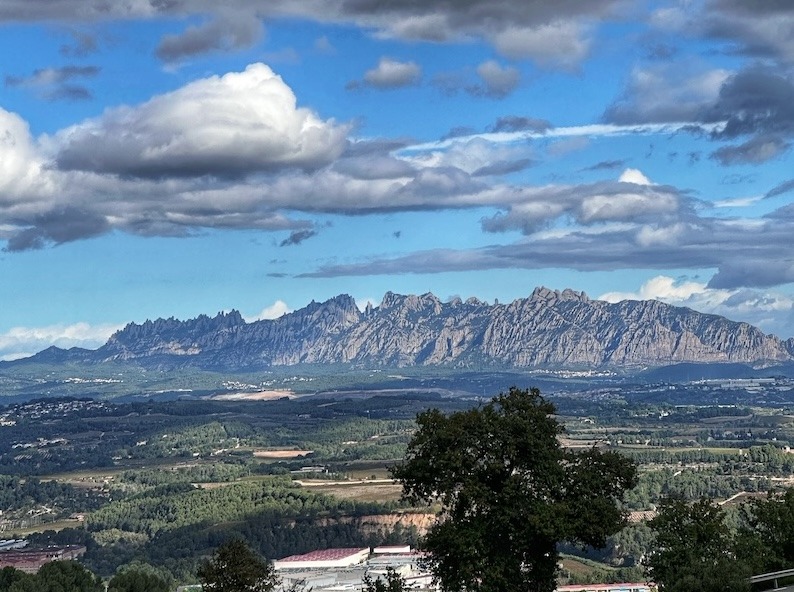
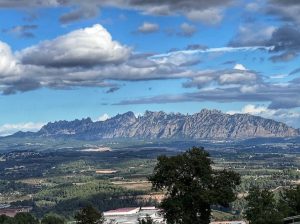
Some estates are just 10 miles from the Mediterranean coast, and the broad strip of land extends inland toward the Montserrat Mountain range. This in-between perch protects the vineyards from extreme weather, but the grapes are exposed to strong winds like the Mistral, which blow disease off grapes, increase complexity and maintain freshness.
For mild weather and beautiful landscapes—without the crowds of high-summer—aim to land in Penedès in late March through May, or come in the autumn, ideally late August through October.
Wineries To Visit, Labels To Look for
Branded, unfairly or not, as cheap and cheerful, Cava can also be incredibly complex and chic. It would be tough to find a better primer for Cava’s past, present and future than at Casa Cordorníu. With more than 450 years of history, Cordorníu is one of the oldest wineries in Spain.
Visit and explore, from the basic discovery tour (75 minutes, a train tour through the cellars, with tastings of two Cavas for €23), to an iconic tour (105 minutes, train tour the the cellars, tasting of three Cavas paired with three chocolates, plus an Ars Collecta Menu at the lauded on-site restaurant for €82.50).
If a trip to Spain isn’t in the cards, try one of Cordorníu introductory Cavas, and one of their more refined examples, to get a sense of the range. A favorite entry-level bottle is the Clasico Cava Brut, which earns consistently high marks for the elegant blend of Macabeo, Parellada and Xarel·lo.
A beloved rarefied example is the iconic Ars Collecta Paraje. Only 15 Spanish Cavas hold the vaunted Paraje Calificado title, which guarantees that the viticultural standards meet vertiginous standards. The Chardonnay for this Cava hails from a special plot in Segria at 286 meters in elevation, with clay soils. It is aged for 90 months. Offering notes of white flowers and stone fruits, with a persistent creaminess, this is velvety, smooth and ideal for pairing with fish. Very small productions that generally sell out quickly.
Raventos i Blanc has been growing wine grapes since 1497. Often considered one of the oldest wineries on the vanguard of modern winemaking, Raventos i Blanc focuses on biodynamic viticulture, 100% native varieties, and vintage-only wine that is aged for a minimum of 18 months.
Twenty-one generations have farmed 90 hectares of vines within a microclimate influenced by the estate’s forest, river, lake, hills and streams. One of the best examples of the skill and terroir of the winery is the Raventos i Blanc Manuel Raventos Negra, a personal selection of the best wines of the vintage. Lovers of brightness, balance, complexity and texture will appreciate the freshness and supreme toastiness of this bottling.
Llopart Winery has become an insidery, cultishly obsessed over winery that just happens to have 600+ years of viticulture in the rearview. Twenty-six generations of winegrowing on mountain vineyards later, the winery offers walks among vineyards, tastings of the organic wines, gastronomic pairings and more. A part of the Corpinnat classification since 2019, the co-founders of the movement utilize 100% native grapes, organic viticulture, hand-harvesting.
A knock-your-socks off bottling is the 1887 Llopart bottling, with 120 months of aging, made from grapes in the oldest mountain vineyards at 380 meters in height. Very limited production it offers incredible aromatic depth, notes of fresh honeyed peaches, brioche, toasted almonds.
Spain’s sparkling wine universe is vast, increasingly complex, but across the board resoundingly delicious. The $8 basic Cava will take you to brunch, the elevated, thoughtfully farmed, 18-month aged beauty will serve you through dinner, and the rarefied, single-vineyard, old-vine, 120-month in cellar humdinger will take you to the moon.
Three Spanish Sparkling Wines to Try at Home
In addition to the labels to look for – Casa Cordorní, Raventos i Blanc, Llopart Winery. These three Cava’s can be found on Wine.com and likely in your local bottle shop.
Planning Your Spanish Sparkling Wine Adventures
WHERE TO STAY
If you want to live and breathe authentic Penedès culture, consider Finca Villadellops. A peaceful, tiny, medieval, refurbished-rustic village set in the heart of the region, there are a range of very rural, but country-chic accommodations set within vineyards, olive groves and almond trees.
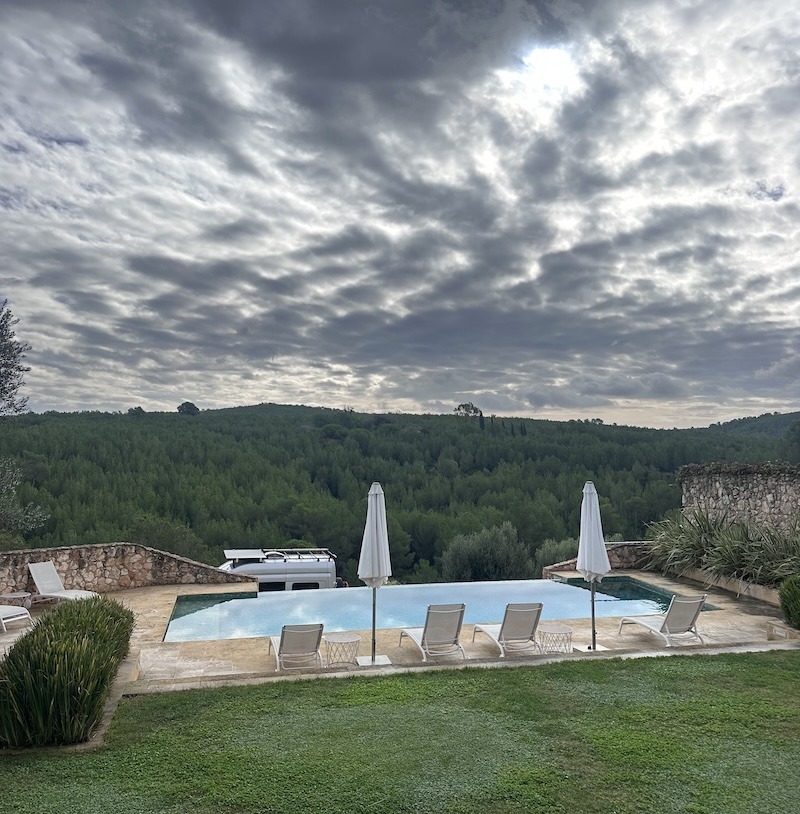
There are a range of farmhouses to choose from, many of which offer private pools, and all of which have been completely restored, with comfortable, modern furnishings. You can stroll the village with its medieval chapel and historic buildings, enjoy private vineyard tours, and embark on long walks down country lanes, or outdoor cycling adventures in the Garraf Massif. Catering is available. The village is a short drive from the towns of Sitges and Vilafrance del Penedès.
And if you need a truly luxurious stay? Head straight for the boutique Font de La Canya. Again set in a rural space with olive trees and vineyards, there are gardens, panoramic views of the majestic Montserrrat, and eight spacious rooms with modern touches, a spa, gastronomic and seasonal eatery, two swimming pools, a paddle court and a fitness room.
WHERE TO EAT
Pack pants with stretch and drawstrings. You should absolutely plan a meal around a visit to Vinseum. The casual Bar de Vins (or wine bar) offers a collection of some of the best, rare local still and sparkling wines (look for Mestres) and tasty seasonal tapas (expect a range of local charcuterie, cheese, olives and extras).
If you want a classic Catalan feast, head over to the nearby El Cigró d’Or, which has earned a nod from the Michelin guide. Renowned for its Catalan cuisine and wine, the menu changes frequently, but classic Catalan dishes like Fideuá (or noodle paella), fresh-caught local fish, cured meats like jamón and crema Catalana.
For an upscale dining experience, shoot over to Vilagut, also in Vilafranca del Penedès, where chef Juliá Bernet pays homage to her grandfather through rib-sticking classics like pigs trotters, red tuna tartare and cuttlefish stew, except ultra-upgraded.
BEYOND THE VINES
Wine lovers will appreciate the devotion museums show to preserving the heritage and stories of the people who have been making wine in Penedès for thousands of years.
The Vinseum showcases archeological, artistic and ethnological treasures from the past. Don’t miss the 14th century Chapel of Sant Pelegri, which is perfectly preserved and now considered a historical treasure. There are a number of permanent and rotating exhibitions with interactive displays and multimedia presentations that will appeal to visitors of all ages.
The space is housed in the 13th century Palau Reial de Vilafranca del Penedès, or Royal Palace, that serves as a cultural landmark, and was once one of the homes of the kings of the House of Barcelona. Bonus: the experience (included in the €10 admission) ends with a wine tasting featuring a local winery.
To see the origins of regional viticulture, check out the Font de la Canya Hill, located in Avinyonet del Penedès. An ancient (625-600 BC) settlement of the Iberian Cossetanian tribe, the settlement was a large trading hub and considered by many to be the cradle of winemaking in the region.
You can’t experience Spain though without traipsing through multiple castles, monasteries, cathedrals and Roman ruins. Don’t miss: Sa Roca monument complex with a medieval church and castle, the Castle of Castellet circa 977, the 13th century Cloister of Sant Francesc.
Sip in More of Spain

Kathleen Willcox writes about wine, travel and culture from her home in Saratoga Springs, N.Y. She is keenly interested in sustainability issues, and the business of making ethical drinks and food. Her work appears regularly in Wine Searcher, Wine Enthusiast, Wine Industry Advisor and many other publications.