
My grandfather ran five miles a day and played golf until his mid 80’s. My cousin, in her mid-70’s skied ever week in Aspen during the winter months and hiked 14rs in the summer. They are two of my physical inspirations and what I want to be when I’m older. So I run. I spin. I make it through my Barre classes (barely). In other words, I try to take care of myself so I can live life to the fullest – even when I’m older. This isn’t a post on not taking care of yourself, because trust me, I could go on for days about that, just take why I started traveling and writing this blog in the first place… Getting older is hard and inevitable but traveling with seniors can be even harder, although it doesn’t have to be.
This post isn’t written to be a knock on traveling with seniors, I’ve had some wonderful experiences doing so. This is more about being real. Knowing your limitations. Being an adult and taking care of yourself so everyone can enjoy the ride. If you’re a senior about to embark on trip or if you’re getting ready to travel with a senior, here are 12 tips – many of which I’ve learned the hard way resulting in major shifts in the direction of my trip/s. A few that lead to the ER…
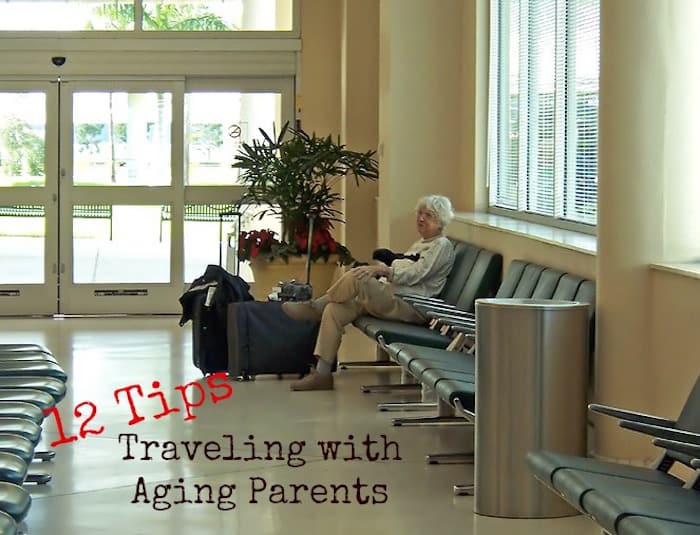
Twelve Tips for Traveling with Seniors
1. Know Where the Closest Hospital Is
iTriage is a good app you can download that locates nearby facilities and will even tell you if they take your insurance. It can also help you identify what aliments are and there severity. The app also notes what insurance is accepted. Seriously, I’ve used this app more times than I’d like to admit – and it wasn’t for me or my kids.
2. Be Prepared For the Role Change
It’s a hard thing for grown kids to shift into the care giver role and harder for aging parents to let them. But face it, it’s life. Roles change and if you don’t fight it or get angry about it, traveling together can be wonderful! A few great tips around this topic came from Facebook and Twitter from folks who frequently travel with seniors.
- Patience, kindness and a sense of humor are required
- Just like when traveling with toddlers – pack a lot of snacks
- Make sure they always receive and keep their dignity
- Always aks first, “would you like some assistance” and then listen
3. Be Prepared to Stay-put
I’m a do’er and like to go. The Husband finds this annoying when we travel so I have compromised in allowing a few hours a day, or even one day (depending on the length of the trip) to just lay-low. With that said, we don’t typically rent a place where we plan to spend a ton of time. It’s more based on location, function and price. Lesson leaned: When traveling with less active folks, you need to find accommodations you can simply hang out at and be comfortable. (This is true when traveling with little kids as well.)
4. Don’t Eat (or drink) Things You Wouldn’t Eat At Home
This sound silly since when on vacation you’re supposed to try new things. However, if you can’t eat certain types of food at home – peppers, chocolate – what makes you think you can eat them on vacation? And if you don’t usually drink alcohol, don’t start now. Especially if you’re at high-altitude. This should be a rule of thumb for most people but when traveling with seniors making a POLITE reminder may be required. Now, scroll back up and reread tip two.
5. Check Medical Needs at the Hotel
Plan ahead to ensure hotels have the equipment you or your senior travel companion might need – oxygen tanks, wheelchairs (for long days of sight seeing), and any other items to make sure everyone is comfortable when they arrive at their destination. If you’re traveling internationally, you should also check to see if the hotel has a doctor on staff who can come to the room if needed.
6. Insurance and Doctors
Make sure to have doctors information for yourself and your senior travel companion programmed into your cell phone in case you need to reach them. And pack your insurance card. Sounds like a no-brainier but it’s surprising how many people don’t carry it with them. It’s beyond frustrating if you’re in a crunch.
7. Don’t Push Yourself – Or Your Travel Companions
Parents usually tell their kids to know their limitations; to listen to their body. Time for them to listen to their own words of wisdom… If you or your travel companion don’t regularly (or haven’t done something in 20 years) like skiing or riding a bike you should not try it the first day of your vacation. Frankly, it might be best to just not try it at all. The key is don’t push your senior travel companion…and don’t push yourself.
8. Get Up and Move
Sitting still for extended periods of time are known risk factors for the development of blood clots in the veins of the legs. Long-haul flights can be a risk factor in susceptible people – overweight, heart disease, etc. On a long flight you and your senior travel companion should get up and walk the aisles, wear loose clothing, don’t drink alcohol, take aspirin, stretch in your seat.
9. Travel with Meds
If you regularly take medications – or are traveling with someone who does – make sure you have a list of them written down. It’s common sense but so often overlooked. Think about it, what’s the first question a doctor ask besides what’s wrong? “Are you taking any medications right now?” They kinda need to know that in order to treat you effectively. Oh, and make sure your travel companion takes enough of their regular medication to last the entire trip. If they don’t you’ll quickly find yourself spending valuable vacation time waiting in line at Walgreens.
10. Hearing Aids
If you need a hearing air, take it with you – and a set of extra batteries. Then, make sure use it, aka PUT THEM IN YOUR EARS. For those of you traveling with seniors, make sure to ask them BEFORE you leave if they have it with them. Otherwise, be prepared to have a sore throat from talking so loudly during your trip. Or, if you’re the hard-head who didn’t bring it, plan to feel excluded from conversations.
11. Set Expectations and Be Prepared to Change Them
What do you want to accomplish or do on the trip? What sights must you see? Where must you eat? Now, be prepared to do none of them and just be with the folks you’re with. Take a book and a deck of cards. Enjoy the views (hopefully) and your surroundings.
12. Sit and Just Be
While you may be disappointed you didn’t get to eat at the most raved about spot in town, you’re with someone who you may not be able to be with much longer. Enjoy it. Get over what you didn’t get to do… Sit and just be together.
Have any more tips for traveling with seniors? Do share…

Elaine Schoch is an award-winning travel writer, wine judge, American Wine Specialist and certified by the Wine & Spirit Education Trust (WSET II). At Carpe Travel she shares wine travel destination guides for ALL WINE LOVERS – from novices to experienced pros – to help them plan their wine adventures, arming them with insider tips, must-visit spots, and things to see and do beyond the vines.
This is such good info. My parents are fairly young now but I could use this when the time comes in future 🙂 bookmarking.
Great information! My parents still travel quite extensively but one day they won’t be able to do so… Your tips will come in very handy!
Well done Elaine. I actually like the last one the best.:)
Great post Elaine, I would almost liken it to the same things you would need in traveling with very young children of course except the hearing aids 🙂
Yes, very similar… =)
Love the kindness you offer here Elaine.
Oxygen therapies are great for elderly with breathing problems. It not only enables them to breathe properly but also nourishes their immune system.
The tip you shared about not only bringing your hearing aid but bringing extra batteries for it as well is very important. Last summer, my mom and I went on vacation, and her hearing aid batteries died. We didn’t have a way to get her any replacements, so I suffered through the sore throat from talking loudly you described. Thank you for sharing this post so that others will be prepared before they leave the house with those who need hearing aids.
Ugh, sorry to hear that happened to you guys! Sometimes it’s the little things we overlook that make a HUGE difference in a trip…
When it comes to traveling with my wife’s cousin we make sure that she has her hearing aids. Since that’s what her doctor from the hearing aids center advised us to do. The both of us make sure to bring batteries and also a charger because the batteries in device can charge up with a charger.
Good tip, thanks!
You make a great tip about making sure that your have their hearing aids and some extra batteries. Hearing aid batteries can sometimes be hard to find (especially while traveling), so it’s a fantastic idea to have some extras on hand. Hearing is a large part of the waipate in conversations or the ambiance will help improvey we experience things. Making sure that everyone can partic anyone’s vacation experience.
I agree it\’s wise to be aware of locations such as hospitals, and even elderly care centers, while taking a senior on a trip. Growing up, I had relatives who lived to a ripe old age, such as my paternal great-grandmother who died at the age of ninety-nine. As a result, I probably became complacent in thinking that seniors are generally healthy and independent. If I could turn back the hands of time, I would have been more observant of the fact that elderly people, in general, often times may need to be taken to facilities of care for additional assistance.
Older people usually have more stuff with them. A bigger space or trunk for traveling would be nice.
Good tip!
Great post shared. 🙂
I was planning to take my aged parents for getaway. All the tips are useful and I will keep them in my mind before boarding. Most of the people forget to take all the necessary medications with them which are too essential while you are away from home.
According to me one should make a list of items which they will take along with them before boarding. This helps a lot.
Thanks for the tip!
These are all great tips for traveling with the elderly! My parents are becoming seniors and these make for good guidelines for when we travel on any family vacations.
Great tips! Elderly individuals deserve to see the world and have fun on a family trip as much as any other person, so going the extra mile to ensure their comfort and safety will really make a difference. Thanks for sharing!
Awesome and such an informative tips. My parents are already seniors and for me is very important there having fun and they’re doing fine. Anyways, I love your blog. Looking forward to more of your articles! 🙂
Thanks, glad you found it helpful!
Hi Elaine,
First off, Congratulations on this post. this is really awesome. Great posts that we can sink our teeth into and really go to work.
Ofcourse it’s the quality of the list, not quantity as that’s how i’ve been able to enjoy being on the leader board.
Great share and thanks for mention here, Wow how cool is that.
Off to share this post now, I want all new bloggers to see that if they don’t already have a plan then they do now.