




DISCOVER GERMAN

WINE COUNTRY

Germany’s reputation as a quality wine producing country was damaged back in the 1980’s when poorly produced, overly sweet bulk wines were widely exported (think Liebfraumilch and Blue Nun). A lot has changed. With 13 officially designated wine regions, the country is producing high quality wines, which includes more grape varieties and styles ranging from sparkling, dry and sweet wines. 

WHERE IS GERMANY'S WINE COUNTRY?

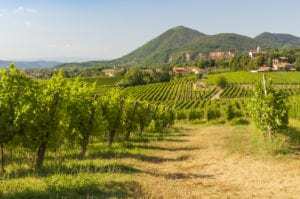
Germany's wine country is concentrated in the southwest, mostly along the Rhine and Mosel rivers, where the climate is milder. Nearly all of it sits between roughly 47–52°N latitude, at the edge of where wine grapes ripen reliably — which is exactly why Riesling (a late-ripening, acid-retaining variety) does so well there.

Frankfurt (FRA) is the main airport for almost everything except for the region of Baden, where Basel-EuroAirport or Stuttgart make more sense. If you're doing a multi-region trip (say, Mosel → Rheingau → Rheinhessen → Pfalz), Frankfurt as a single in/out point covers nearly the whole route without much backtracking.

BEST TIMES TO VISIT?

If you want both good weather and harvest atmosphere without peak crowds the best time to visit is mid-to-late September, just as harvest is ramping up but before the biggest festival weekends hit. That said, July and August offer warm, long days, good for hiking the vineyard trails (Mosel and Rheingau both have excellent options.)

It can get crowded with domestic tourists, especially around the Rhine. May and June can be ideal as it's still quiet and the day time temperatures are cooler.

TERROIR

Germany’s terroir is defined by one big fact: it has traditionally been one of the coolest wine-growing climates in the world, with most vineyards sitting near the northern limit of where grapes can reliably ripen.

Climate: Traditionally, Germany is known for its cool continental climate with real seasonal swings — cold winters, moderate summers, and a short growing season. Which is exactly why acidity is the hallmark of German wine (think Riesling’s signature zip). However, summers can now be much hotter than in the past.

Rivers play a huge role in the German wine production. In the Rhine, Mosel, and their tributaries moderate temperatures and reflect sunlight back onto steep vineyard slopes, which is often the difference between grapes ripening or not.

Topography: Many of the best vineyards are planted on dramatically steep, south-facing slopes along river valleys (the Mosel is the extreme example) to maximize sun exposure in a marginal climate. This also aids drainage, which matters in a region that gets real rainfall.

Soil: Highly varied by region — slate in the Mosel (retains heat, drains well), volcanic and loess soils in the Rheinhessen and Pfalz, and limestone/marl in parts of Franken and Baden. Slate in particular is often credited with giving Mosel Rieslings their distinctive minerality.

Germany's 13 official quality wine regions (Anbaugebiete) are: Ahr, Baden, Franken, Hessische Bergstrasse, Mittelrhein, Mosel, Nahe, Pfalz, Rheingau, Rheinhessen, Saale-Unstrut, Saxony, Sachsen and Württemberg.

TOP GRAPE VARIETIES IN GERMANY

Riesling put Germany on the world’s wine map so we’ll start here. It’s indigenous to Germany and thrives in the country’s cool climate. Generally, a single varietal wine, Riesling rarely sees oak. Its natural flavor profile shows apple, citrus and stone fruits. Dominant flavors on the nose and palate include lime, lemon, white peach, green apple, petroleum and wet slate.

Riesling is the star of the show in Germany, but it’s not the only great wine coming out of the country. 

It’s true, there are other white wines in Germany. You can find Muller-Thurgau, a crossing between Riesling and Madeline Royale that produces a floral and fruity white wine. Pinot Gris and Pinot Blanc are both typically produced as dry wines and are often labeled under their French or Italian names — Pinot Gris/Grigio and Pinot Blanc/Bianco — rather than their German names, Grauburgunder and Weissburgunder. A small amount — only about 1% — of Gewürztraminer is also produced in Germany. It’s so good that it’s worth mentioning.

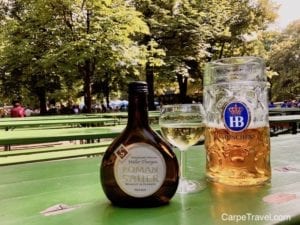
One of my favorite German white wines is Silvaner. You’ll spot it immediately by its distinctive flask-shaped bottle, the Bocksbeutel, a packaging quirk that’s become as much a regional signature as the grape itself. Compared to Riesling, it’s softer and less acid-driven.

German Wine Guide
Photo by Elaine Schoch

Germany is the Third-largest Producer of Pinot Noir in the World.

Pinot Noir often gets overlooked since Riesling takes center stage in Germany but being the third-largest producer in the world is pretty huge. Germany only trails behind France and the United States.

Known as Ppätburgunder in Germany, it’s typically found in warmer climates, including the regions of Ahr, Pfalz and Baden. Pinot Noir is a finicky grape. It prefers cooler temperatures but frequently struggled to ripen in Germany’s cold climate, which resulted in flat wines with little flavor and structure. As the climate has warmed and farming practices improved, Pinot Noir is thriving in all 13 winemaking regions, each with its own distinct flavor profiles. Other important red varieties include Portugieser, Trollinger and Dornfelder, which produces a light bodied and fruity wines that can deceive you given its intense deep, red coloring.

UNDERSTANDING GERMAN RIESLING

Not all Rieslings are Sweet

While most of us know Riesling to be on the sweeter side, drier styles are the current trend among winemakers. Riesling gets its aging potential from high levels of acidity while its noteworthy residual sugar preserves its freshness. If you come across an older bottle, definitely give it a try. Aged Rieslings are fascinating, but, again not all Rieslings are sweet.

What Makes a Wine Sweet or Dry?

Grapes contain natural sugars. During the fermentation process, the yeast from the grapes eats the sugars, which produces alcohol and CO₂. If the yeast consumes all the sugar you get a dry wine. If fermentation is stopped early – either deliberately or because the yeast dies off – some sugar remains, and you get a sweeter wine. So “dry” and “sweet” are really just describing the end result of how far fermentation ran its course.

What Makes a Riesling Sweet or Dry?

The short answer to spotting a dry Riesling on the shopping isle is to look for the word Trocken on the label. These tend to run noticeably higher in alcohol, often 12% ABV or more, compared to 7.5-10% ABV for their sweeter counterparts. That’s because all the sugar has been fermented out, leaving less residual sweetness but more alcohol. So, if you’re scanning a shelf and can’t find the word Trocken, a lower ABV is your sign the wine leans to the sweeter side. This trick is true for all wines, a higher ABV = drier wine while a lower ABV = sweeter wine.

If you want to go deeper you need to understand the language of the wine label, beyond the vineyard and producer. The wine labels in Germany can carry several layers – a quality tier, a ripeness level, and sometimes a taste designation. Think of it as two separate labels stacked on one bottle. The first tells you the wine’s quality tier, basically how good the grapes were, from everyday table wine, Deutscher Wein, Landwein, and Qualitätswein (QbA). These wines will all be dry wines.

The top tier wines will be labeled Prädikatswein and will all contain residual sugar. Of course, there are another six tiers within Prädikatswein based on the amount of residual sugar in the wine.

German wine
wine for beer drinkers

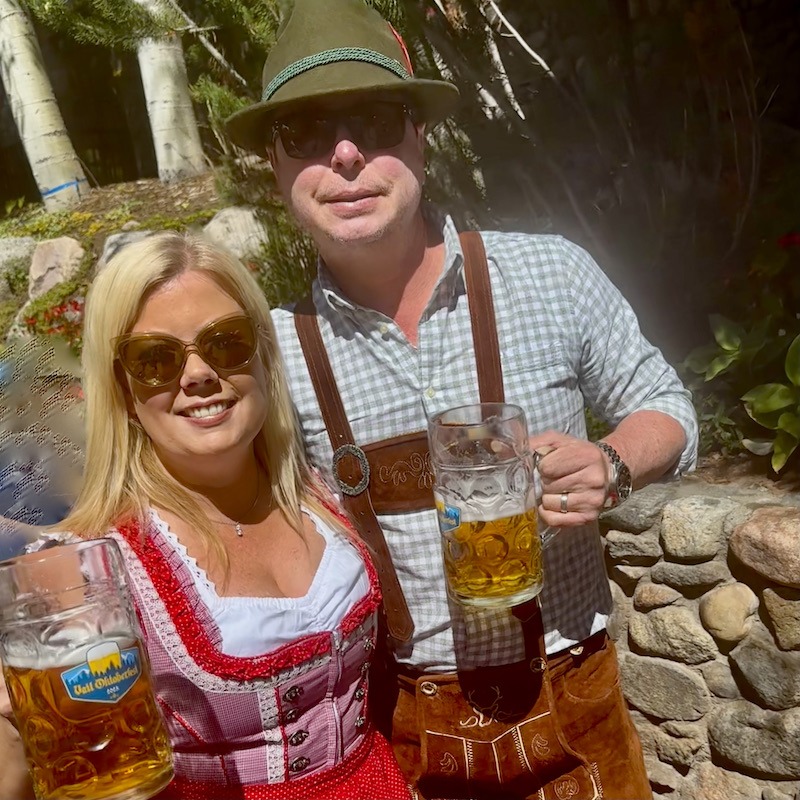
Ever wonder why most Oktoberfest celebrations happen in September

Long story short, in 1810, Bavarian Crown Prince Ludwig married Princess Therese of Saxe-Hildburghausen, and Munich threw a party — horse races and all. It was such a hit they’ve done it every year since, gradually shifting the start earlier into September — for warmer/drier weather — while keeping the name “Oktoberfest” out of pure tradition. It now wraps up around the first Sunday in October.

Wine for Beer Drinkers…or Beers for Wine Lovers: If you’re a beer lover interested in exploring the world of wine, or a wine lover who doesn’t want to be overwhelmed with choices the next time they walk into a brewery, it’s time to explore this guide of wine for beer drinkers…or beer for wine lovers.

Planning Your German Wine Country Vacation